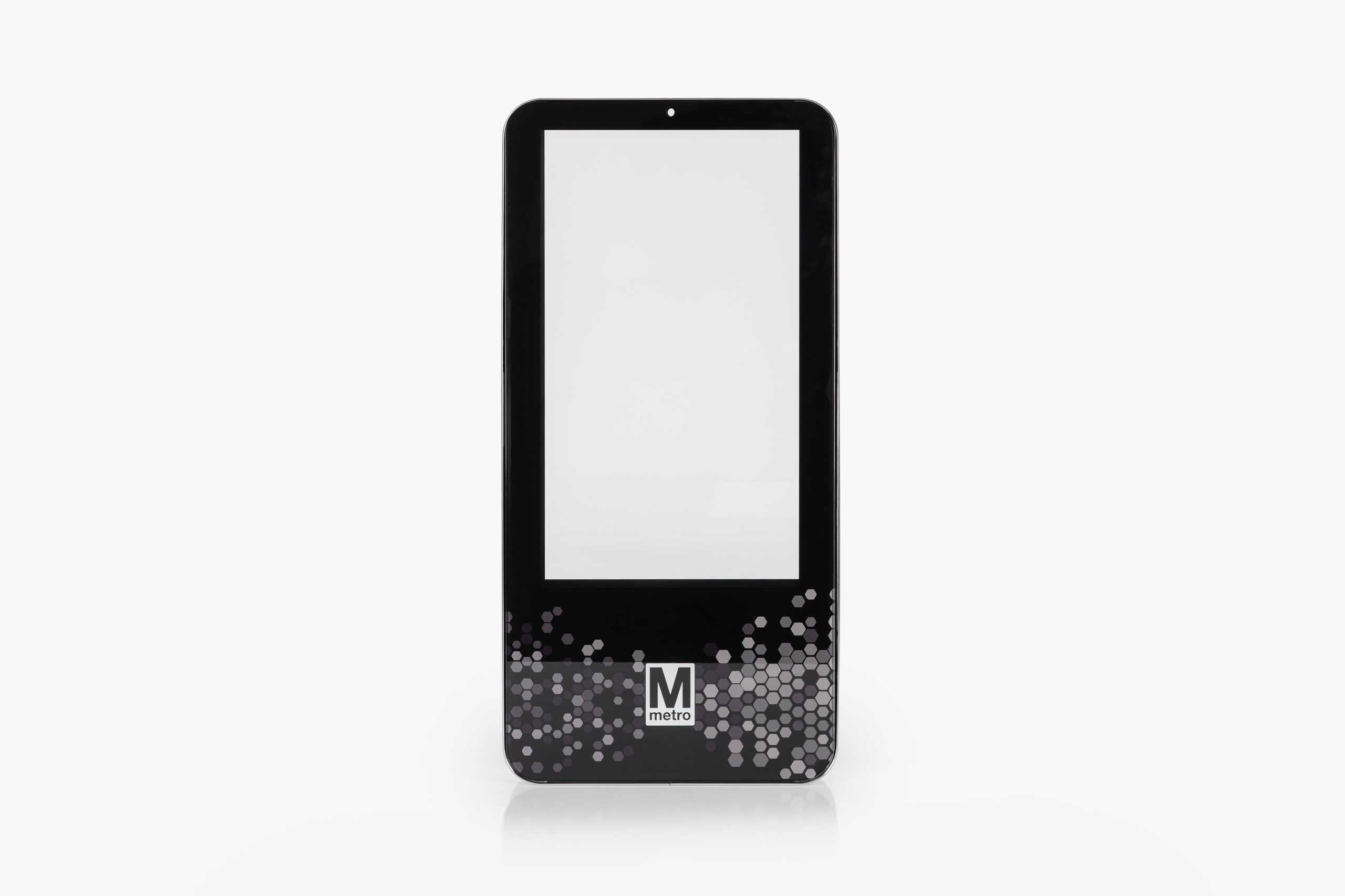
Double-Sided Passenger Information Display
The purpose of this device is to provide Washington, D.C. Metro passengers with all the information they need during their journey, as part of the onboard Passenger Information System (PIS).
Design challenge
The display is part of the Hitachi contract for WMATA and is installed inside the train car, near the entrance doors, supported by a structure with lateral tubes: a critical position with high passenger traffic and exposure to impacts, dirt, and continuous use. The project started from a design concept already defined by the client, but required technical development to make it fully manufacturable, reliable, and suitable for its operating environment.
Product requirements
The starting requirements for the mechanical development of this product were:
- Safety: the product comes into direct contact with passengers, so the glass must remain safe in the event of impact or breakage.
- Environmental resistance: the display must withstand dirt, wear, vandalism, and intensive use while maintaining performance and quality over time.
- Regulatory compliance: NFPA 130 (Standard for Fixed Guideway Transit and Passenger Rail Systems), the U.S. reference standard for fire safety in railway systems, rules out the use of painted components.
- Flatness: essential for proper mating between glass and structure and for the success of the structural bonding process.
- IP54 environmental protection and delivery of the product already protected and ready for electronic integration.
Material selection
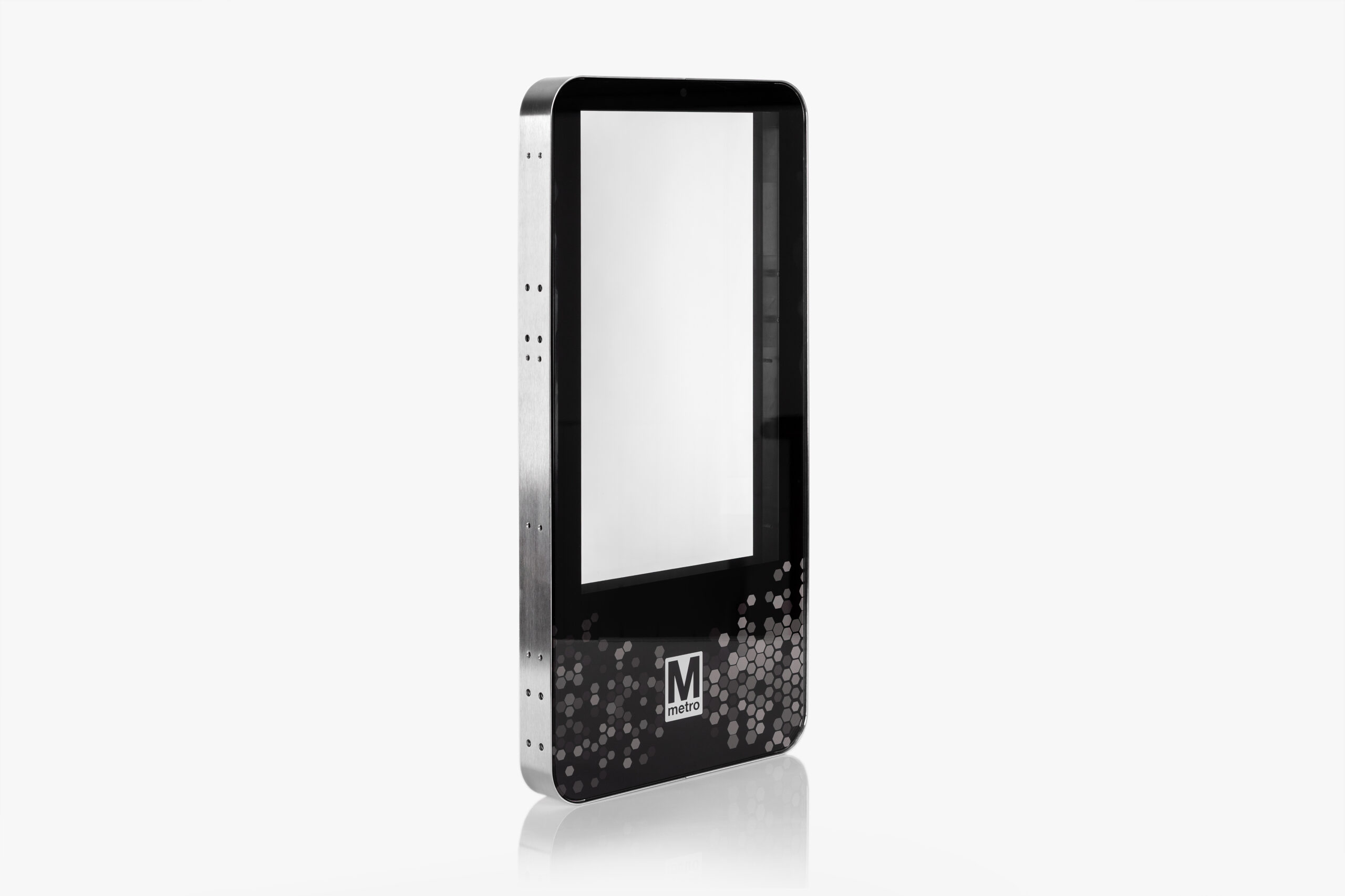
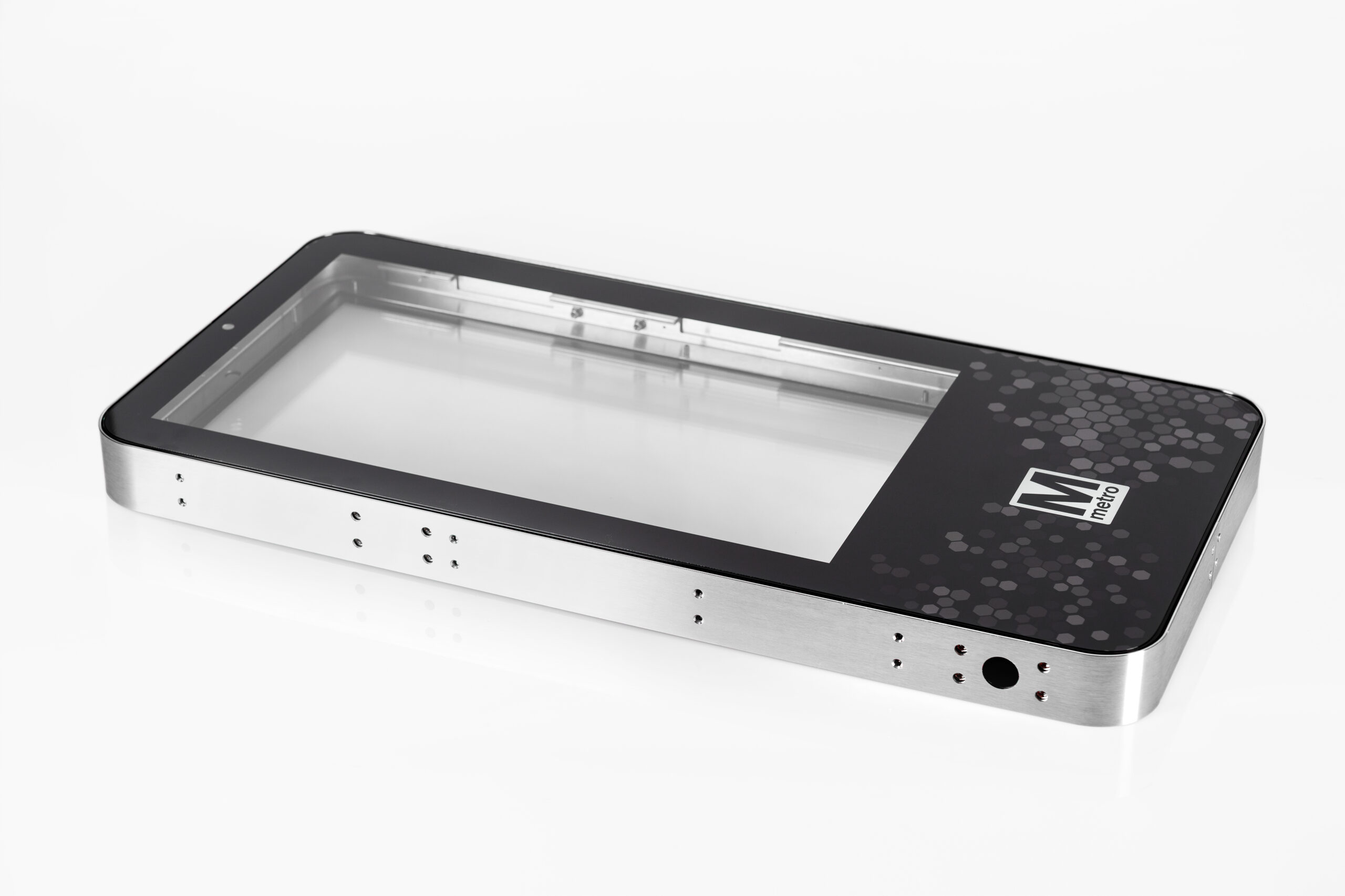
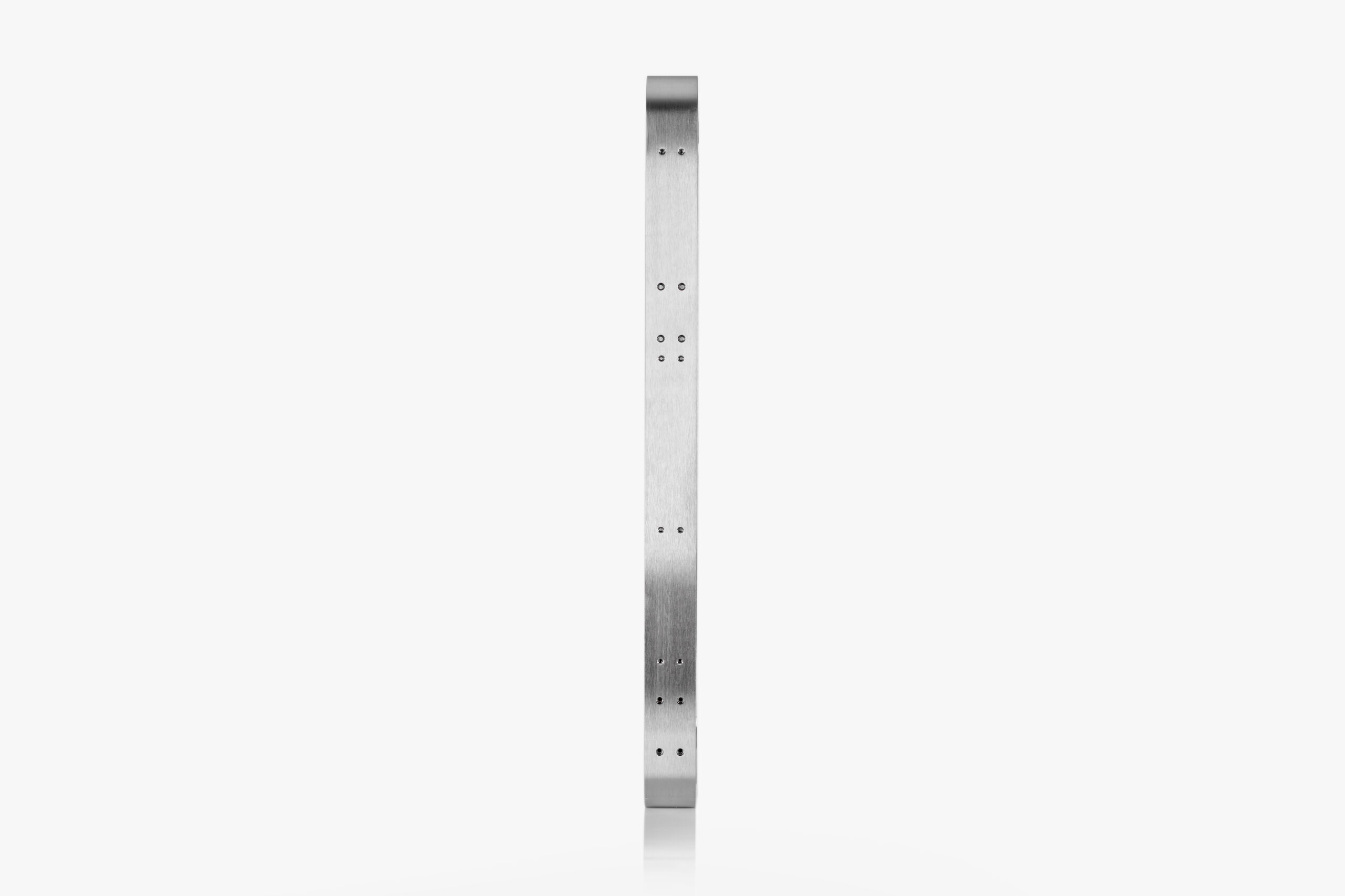
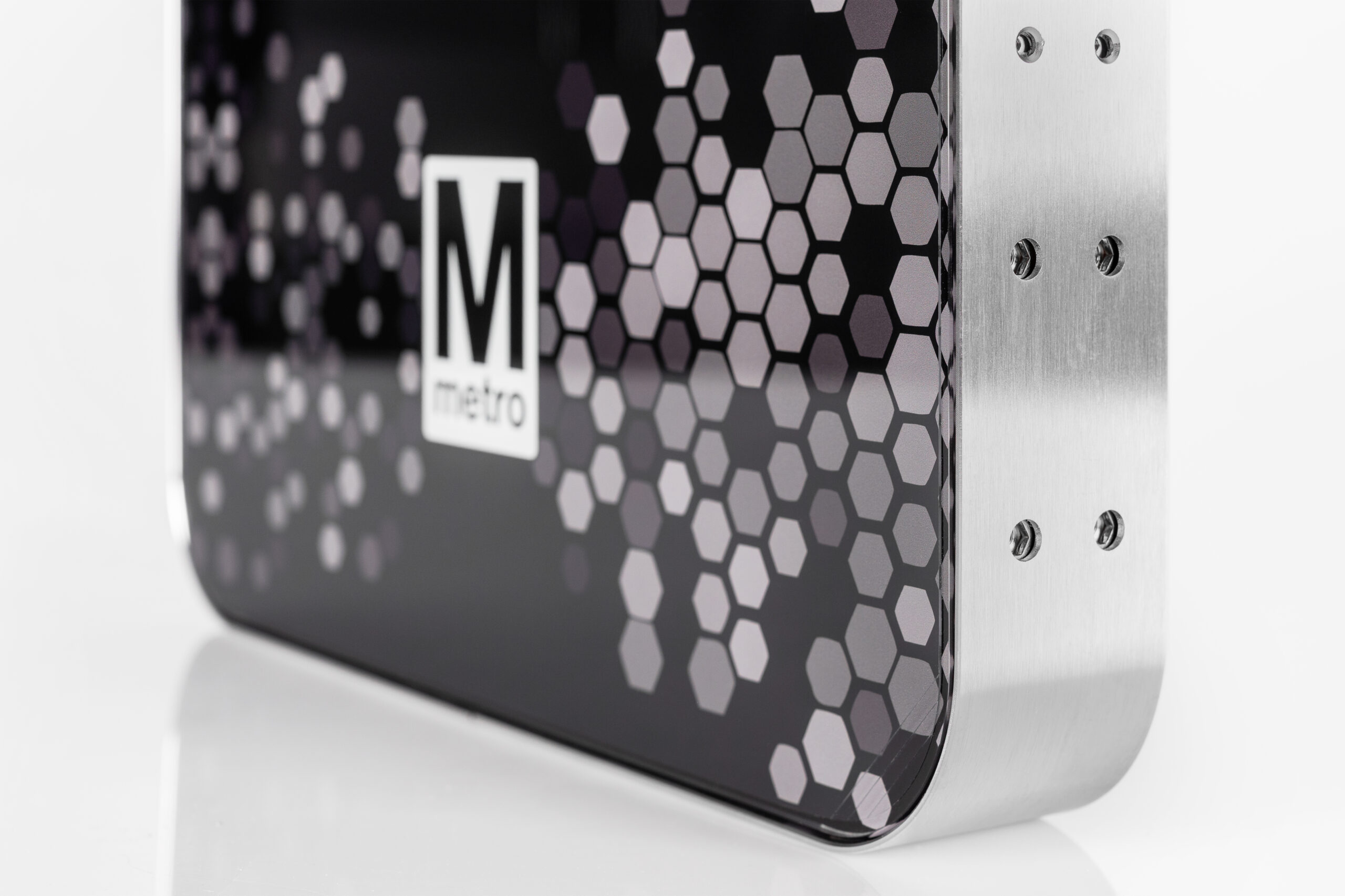
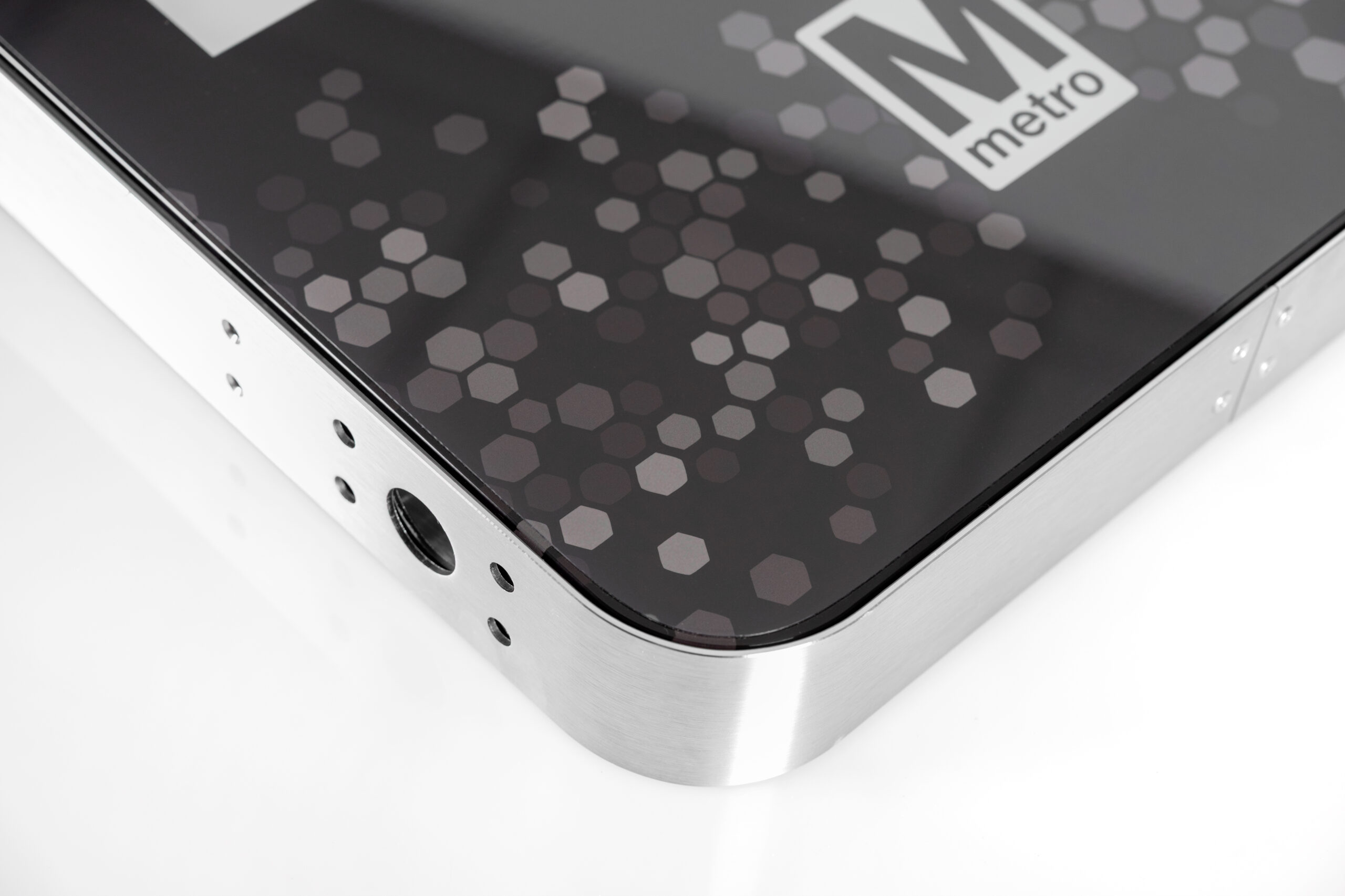
The structure is made of stainless steel, to comply with the regulatory restriction on painting while ensuring rigidity, durability, and dimensional stability.
The glass is monolithic tempered glass, selected over laminated glass for its superior flatness, ease of processing, and tighter tolerance control. Together with beveled edges and multilayer protection systems, tempered glass meets the safety requirement in the event of impact or breakage.
Structural bonding
The joint between glass and stainless steel relies entirely on adhesive bonding, with no alternative mechanical fastening: the adhesive bead must therefore be continuous, uniform, and defect-free to ensure sealing performance and long-term strength.
For this reason, an automated CNC-controlled adhesive dispensing process was introduced, ensuring uniformity, precise bead control, and process repeatability. The adhesive is Sika 265, selected following tests carried out with the client and applied by EAB-certified operators.
The adhesive is applied directly to the glass, taking advantage of its greater flatness compared to the structure and improving process reliability.
Flatness and deformation control
Even minor deformations, whether originating from the glass or from welding, could compromise component fit and bonding quality. Targeted manufacturing solutions were therefore introduced:
- angle brackets manufactured with an automated process for improved precision
- laser welding to minimize deformation
- replacement of rivets with threaded holes in sheet metal
Positioning and assembly
In a system where adhesive bonding is the sole joining method, even minimal misalignments can disrupt bead continuity, generate stress, and reduce reliability. Precise and repeatable positioning, with alignment along all axes, was essential.
Dedicated positioning fixtures were designed to ensure accurate glass centering and uniform force distribution during bonding.
The gap between glass and structure is controlled by a 1.1 mm double-sided adhesive tape spacer, which ensures uniform compression of the sealant and an even distribution of the adhesive bead across the entire bonding surface.
Dedicated tooling was also developed for gasket installation.
Graphics on glass
The choice of monolithic glass required the graphics to be applied to the rear surface of the panel. To meet both bonding and aesthetic requirements, two printing technologies were combined:
- vitrified ceramic printing in the bonding areas: fused into the glass, it ensures compatibility with the structural sealant and reliable adhesion
- organic printing in the visible areas, for superior graphic quality and color reproduction
Complete product supply
The product must remain intact not only during operation but also throughout transportation and assembly, without compromising its appearance. A dedicated protection and packaging system was therefore developed, delivering to the client a display that is already protected, IP54 sealed, and ready for electronic integration.
Materials and technologies used
This system is made of:
- Stainless steel for the structure
- Monolithic tempered glass for the front panel
- Sika 265 structural adhesive for glass/stainless steel bonding
- 1.1 mm double-sided adhesive tape for controlled spacing
- Vitrified ceramic printing and organic printing for the glass graphics
- Gasket for IP54 sealing
The result was achieved using several technologies: CNC adhesive dispensing, automated angle bracket manufacturing, laser welding, threading in sheet metal, vitrified ceramic printing, organic printing, gasket installation with dedicated tooling, and final assembly.
The starting point of your growth.
Do you have a similar product to make?
Ask for support from your expert electronics custodians!