Sheet Metal Punching: Technologies, Materials and Applications in Electronic Enclosures
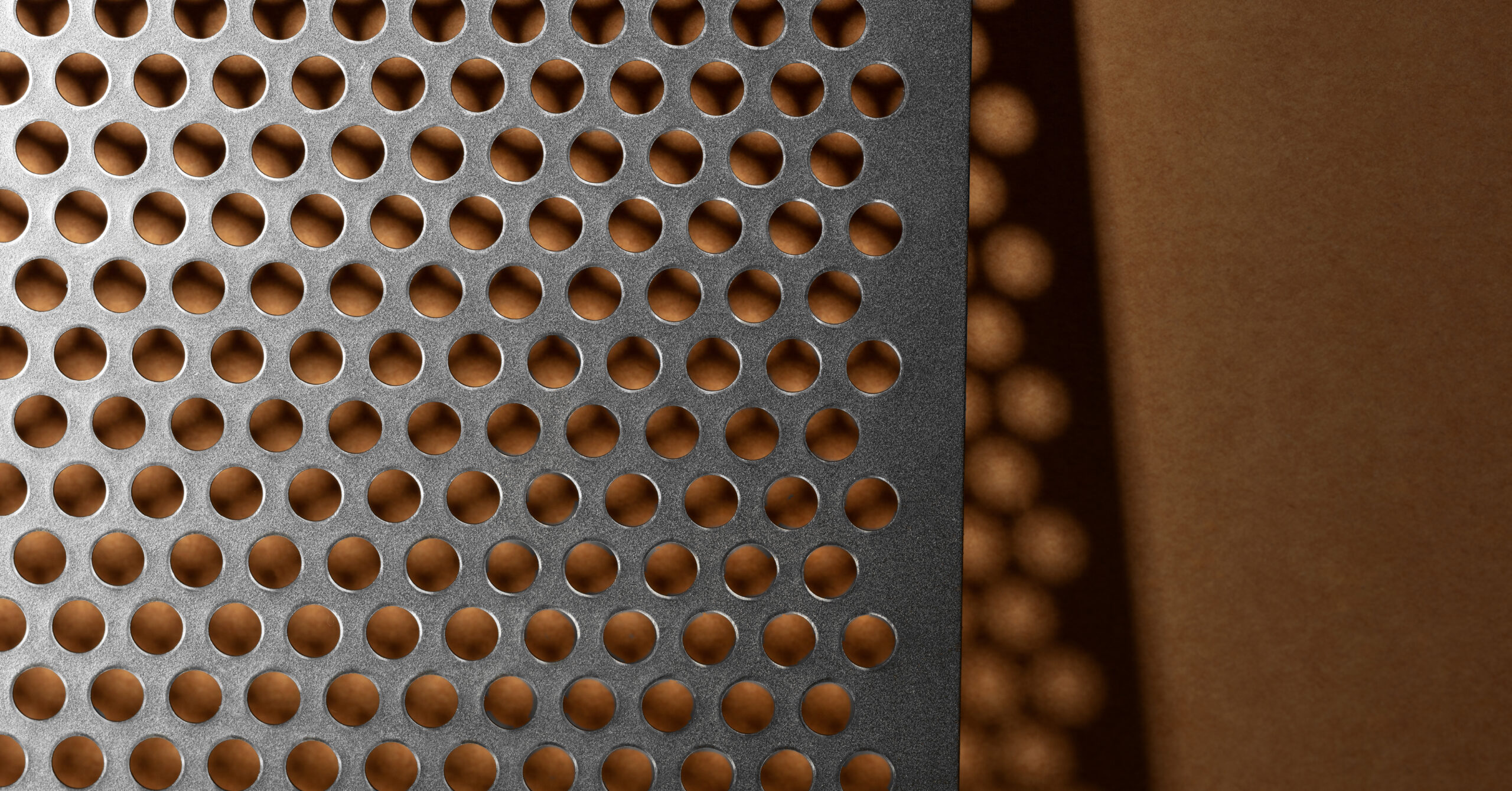
Sheet metal punching is one of the most widely used mechanical processes in the production of electronic enclosures. It allows the creation of holes, slots, shapes and three-dimensional deformations on metal sheets with high precision and repeatability, making it essential for those who design and manufacture structures intended to house electronic components.
At elmec, punching is a core process within our production workflow. We operate state-of-the-art CNC punching machines, including combined punching + laser cutting lines, allowing us to integrate multiple operations into a single production phase. In this guide, we explore how the process works, the available technologies, workable materials and specific applications in the field of mechanics for electronics.
What is punching and how it works
Punching is a mechanical process that consists of deforming, shearing or perforating a metal sheet through the combined action of a punch (upper tool) and a die (lower tool). The punch applies controlled pressure to the sheet, which is stressed against the underlying die until the material deforms or is cut, producing the desired feature: a hole, a slot, an emboss, a countersink or a localized forming.
The principle is conceptually simple, but its industrial application requires precision, expertise in tool selection and strict control of processing parameters. CNC punching (Computer Numerical Control) has brought this process to a level of automation, speed and accuracy that makes it ideal for producing series components with repetitive geometries and tight tolerances.
Punching, laser cutting and shearing: key differences
Punching differs from other sheet cutting processes in its ability to combine multiple operations in a single phase. Unlike laser cutting, which works exclusively by separating material through a concentrated energy beam, punching can also deform the sheet without cutting it. Embossing, ribs, countersinks, localized forming and preparation for threading or fastener insertion are operations typically carried out through punching.
Shearing, on the other hand, is limited to straight cuts across the entire width of the sheet and is generally used for rough cutting of plates before further processing.
Sheet metal punching: process and technologies
Modern punching machines are high-productivity CNC systems equipped with tool turrets capable of holding dozens of punches and dies. During the production cycle, the sheet is automatically positioned and moved, while the turret selects the required tools in sequence to perform the programmed operations.
CNC punching machines
CNC punching machines represent the production standard for precision sheet metal work. Programming software automatically manages sheet positioning, tool selection and operation sequences, ensuring absolute repeatability even on large batches. Multi-station turrets allow rapid switching between tools, maintaining high productivity without compromising precision.
Combined punching + laser cutting systems
One of the most advanced solutions in sheet metal processing is the combined punching + laser cutting line. These machines integrate two complementary technologies in a single workstation: the punch for holes, deformations and fastener preparation, and the laser (CO₂ or fiber) for contour cutting, irregular geometries and complex profiles.
The advantage is immediate: the sheet is loaded only once, and all operations are completed in a single setup, reducing time, costs and the risk of misalignment.
At elmec, our systems perform CO₂ laser cutting and fiber laser cutting, and we combine both processes to leverage their respective advantages. This significantly expands our production capabilities and allows us to handle even highly complex geometries.
Punches and dies: standard and special tools
Punching quality largely depends on tool selection. Standard punches and dies (round, square, rectangular, oblong) cover most production needs: holes for screws, ventilation slots, openings for cables and connectors.
For specific applications, custom-designed tools are used to create dedicated shapes, logos, special grids or deformations not achievable with standard tooling. The use of special tools greatly expands the application range of punching, making it an extremely versatile process.
Materials: steel, aluminum, stainless steel and more
Punching can be applied to a wide range of metallic materials, with typical workable thicknesses ranging from 0.5 mm up to higher values depending on the material and machine used. Each metal has specific characteristics that influence tool selection, punching force and achievable tolerances.
Carbon steel
Carbon steel (such as DC01) is one of the most common materials in industrial punching. Its good ductility allows clean and precise deformations, while its mechanical strength makes it suitable for structural components, brackets and enclosures used in mechanically demanding environments. After punching, these components are typically treated with protective finishes such as galvanizing or coating.
Aluminum and aluminum alloys
Aluminum is highly valued in punching due to its light weight, natural corrosion resistance and excellent machinability. Lower punching forces are required compared to steel, reducing tool wear and enabling high production speeds. Punched aluminum sheets are widely used in electronic enclosures, front panels, heat sinks and lightweight housings where weight is critical.
Stainless steel
Stainless steel requires higher punching forces and careful tool selection due to its hardness and tendency to work harden. However, its exceptional corrosion resistance makes it essential for enclosures used in aggressive environments such as food processing, pharmaceuticals, medical applications, outdoor installations and industrial environments with chemical exposure. Punching allows precise holes and shapes even on thicker sheets, provided tools and parameters are correctly calibrated.
Coated steels, copper and brass
Punching is also applicable to coated steels such as Aluzinc® and Magnelis®, which combine the mechanical properties of steel with high corrosion resistance coatings. Copper and brass, valued for their electrical and thermal conductivity, are punched for specialized components such as contacts, shielding plates and dedicated heat dissipation elements.
Applications in electronic enclosures
In electronics-related mechanics, punching is not a generic operation: every hole, slot and deformation serves a specific function related to the correct operation of the device.
Typical applications include:
- Ventilation and thermal dissipation holes: grids and ventilation patterns ensure proper airflow and heat dissipation while maintaining required IP ratings
- Connector openings: slots and shaped holes for USB, Ethernet, power and other interfaces must meet tight tolerances
- Front and rear panels: openings for displays, buttons, indicators and fans
- EMI/EMC shielding grids: designed to protect electronics from electromagnetic interference
- Fastener seats: preparation for self-clinching fasteners, nuts and spacers
- Embosses and structural reinforcements: localized deformations that increase stiffness without adding weight
Punching vs laser cutting: how to choose
Punching and laser cutting are complementary technologies.
Punching is more efficient when:
- large quantities of repetitive holes are required
- three-dimensional deformations are needed
- fastener preparation is required
Laser cutting is preferable when:
- complex contours and free geometries are needed
- frequent design changes occur
- no tooling investment is desired
Laser cutting also ensures cleaner edges on thicker materials and does not involve tool contact, although it may generate a heat-affected zone on the edge.
From an economic standpoint:
- punching becomes more competitive at higher volumes
- laser cutting offers more stable costs and higher flexibility
The choice depends on geometry, production volume, material and required operations.
elmec punching services in Brescia
From our facility in Polaveno (BS), in the heart of Italy’s manufacturing district, we provide sheet metal punching services fully integrated into our production ecosystem.
Punching is not a standalone process for us, but the starting point of a complete workflow that includes CNC bending, precision machining, fastener insertion, surface finishing and assembly.
Our machinery includes CNC punching machines with CO₂ and fiber laser cutting, as well as combined systems that perform both operations in a single phase. We process sheets from 0.5 mm to 10 mm thickness, working with carbon steel, aluminum alloys, stainless steel, coated steels (Aluzinc®, Magnelis®), copper and brass.
Each production phase is monitored through dimensional and visual inspections. Processes are tracked by batch and linked to material and treatment certifications, ensuring full traceability and quality consistency from prototype to mass production.
We serve multiple industries, including industrial automation, HMI, building automation, audio/video, energy management, vision systems, broadcast and railway applications. We offer both custom solutions and standard products (19” rack enclosures, drawers, front panels and accessories), along with supply services such as prototyping, electronics integration, custom packaging and lean production management.
Do you have a project that requires precision punching for electronic enclosures?
Send us your 2D/3D drawings and specifications: we will identify the most efficient solution for your volumes and application context.
Contact us for a dedicated technical consultation—our team is ready to support you from prototyping to mass production.