Metal passivation for electronics: complete guide
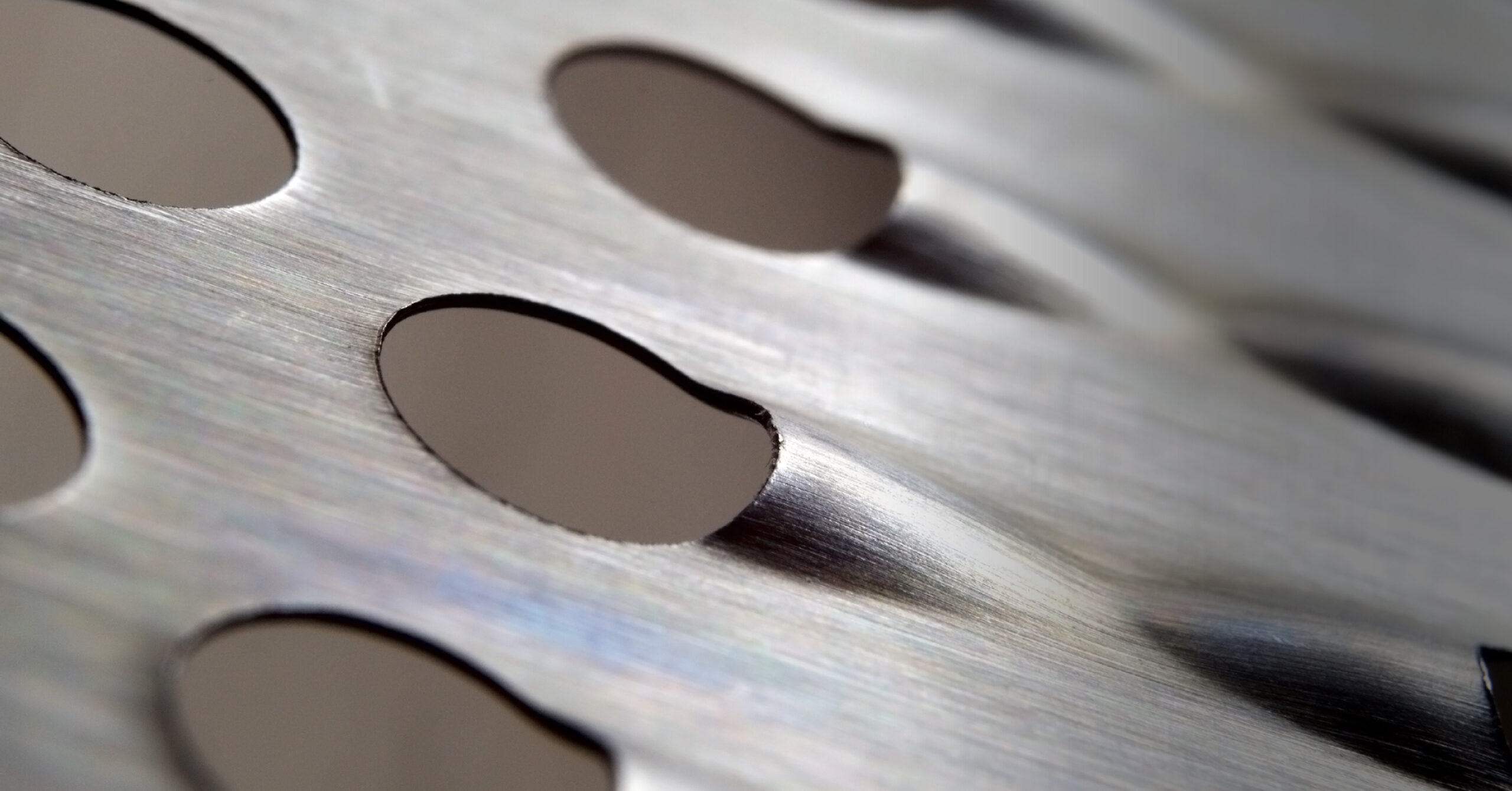
In the production of electronic enclosures, every choice of material and surface finish has a direct impact on the performance and durability of the final product. Passivation is one of the most important surface treatments for those working in mechanics applied to electronics: it protects metals from corrosion, restores their protective properties after machining processes and, when required by the production cycle, can contribute to preparing the surface for subsequent treatments.
Yet, despite its importance, passivation is often confused with other treatments (anodizing, chromate conversion) or underestimated during the design phase. In this guide, elmec explains what passivation is, how it works on different materials, when it is essential and how it differs from other finishing treatments.
What is passivation: chemical principle and protective function
Passivation is a chemical treatment designed to create or enhance a protective oxide layer on the surface of a metal, significantly increasing its resistance to corrosion. The term “passivation” comes from the concept of a “passive surface”: a surface that, thanks to this stable oxide film, becomes less reactive and more resistant to corrosive agents in the surrounding environment.
The principle is common to several metals, but the specific mechanism varies. In stainless steel, passivation enhances the chromium oxide layer (Cr₂O₃) that naturally forms on the surface. In aluminum, the treatment stabilizes and homogenizes the surface film through a chemical conversion process that complements the oxide layer naturally formed when the metal is exposed to air. In both cases, the passive layer is invisible to the naked eye (a few nanometers thick), yet it makes the difference between a component that lasts over time and one that degrades.
In the context of metal enclosures for electronics, passivation serves three main functions:
Corrosion protection: prevents oxidation and degradation of the metal enclosure, preserving the integrity of the electronics it contains.
Restoration after machining: processes such as laser cutting, bending, punching and milling can damage or remove the natural passive layer. Passivation restores it.
Preparation for subsequent treatments: a passivated surface can improve adhesion for coatings, plating and other protective finishes.
Aluminum passivation: process and applications in electronic enclosures
Aluminum is the most widely used material for electronic enclosures due to its light weight, thermal conductivity and workability. Its natural corrosion resistance comes from the aluminum oxide layer (Al₂O₃) that forms spontaneously when exposed to air, but this layer can be compromised by machining, handling or exposure to aggressive environments.
Aluminum passivation generally consists of a chemical conversion treatment that removes surface contaminants and creates a more stable and uniform protective film than the natural one. The most common processes use trivalent chromium-based solutions or chrome-free compounds, in line with current environmental regulations.
The benefits of aluminum passivation in electronic enclosures include:
Improved corrosion resistance: essential for enclosures used in humid, saline or chemically aggressive environments.
Improved coating adhesion: a passivated surface can provide optimal anchoring—particularly in chemical conversion treatments—for powder or liquid coatings, increasing long-term durability.
Preserved surface appearance: the treatment does not alter part dimensions nor significantly change its appearance, maintaining aluminum’s aesthetic characteristics.
Compatibility with subsequent processes: passivation integrates naturally into the production cycle, between machining and final finishing treatments.
Typical applications include frames, unibody housings, custom displays, front panels and enclosures used in sectors such as industrial automation, building automation, HMI and vision systems.
Stainless steel passivation: restoring protection after machining
Stainless steel owes its corrosion resistance to the chromium oxide layer (Cr₂O₃) that naturally forms on its surface. This passive film, only a few nanometers thick, acts as an invisible barrier between the metal and the environment, preventing oxidation reactions. However, natural passivation has its limits.
During machining processes (cutting, bending, punching, milling, welding), the passive layer can be damaged, removed or contaminated. Iron residues from tools, foreign metallic particles, machining oils and welding oxides can compromise the integrity of the protective film, creating vulnerable points where corrosion can initiate.
Chemical passivation of stainless steel addresses this issue. The process may include, when necessary:
Pickling: removal of welding oxides, scale and surface contaminants using acidic solutions (nitric acid, citric acid or specific mixtures).
Passivation proper: immersion or application of oxidizing solutions that dissolve free iron particles and promote the formation of a new chromium oxide layer that is uniform, compact and chemically stable.
Rinsing and drying: complete removal of chemical residues to avoid unwanted reactions and ensure a clean surface ready for use or further treatments.
The result is a component with a more uniform, cleaner and more resistant passive layer than the one formed naturally. This is particularly important for enclosures used in critical environments: outdoor installations, food processing, pharmaceutical, medical and industrial environments with high contamination levels.
Passivation, anodizing and chromate conversion: differences and selection criteria
In the field of surface treatments for electronics-related mechanics, passivation, anodizing and chromate conversion are often confused or considered interchangeable. In reality, they are distinct processes in terms of principle, applicability and final result. Understanding their differences is essential to choosing the most suitable treatment for your project.
Passivation
Passivation is a chemical treatment that creates or enhances the natural oxide layer of a metal. It applies to both aluminum and stainless steel. The resulting layer is extremely thin (nanometers), does not alter part dimensions and primarily aims at corrosion protection. It does not provide electrical insulation or significant abrasion resistance. It is the reference treatment for restoring protective properties after machining and as preparation for subsequent treatments.
Anodizing
Anodizing is an electrochemical process applicable exclusively to aluminum and its alloys. Unlike passivation, it produces a much thicker oxide layer (from 5 to over 25 microns), which is hard and porous, and can be colored and sealed. Anodizing provides corrosion resistance, abrasion resistance and electrical insulation, making it ideal for visible components, mechanical contact surfaces and applications where aesthetics and surface durability are priorities. It alters part dimensions (the layer grows both outward and inward) and requires careful tolerance evaluation.
Chromate conversion
Chromate conversion is a chemical conversion treatment that creates a protective film based on chromium compounds on the metal surface. It is mainly applied to aluminum and zinc alloys. The resulting layer (a few microns thick) provides good corrosion resistance and, above all, excellent adhesion for subsequent coatings. Hexavalent chromium (Cr VI) processes are being phased out for environmental reasons, replaced by trivalent chromium (Cr III) and chrome-free technologies such as SURTEC-based treatments. Chromate conversion is one of the main pre-treatments used before powder or liquid coating.
In summary: passivation protects against corrosion with minimal dimensional and aesthetic impact; anodizing adds hardness, electrical insulation and color options but is limited to aluminum; chromate conversion acts as the ideal bridge between machining and coating. The choice depends on the material, the operating environment and the sequence of treatments required by the project.
When passivation is needed in your electronic project
Not all projects require passivation, but in certain conditions this treatment becomes essential to ensure product durability and protect the electronics it contains. Here are the main scenarios where passivation is strongly recommended:
Outdoor installations and aggressive environments
Enclosures used outdoors are exposed to humidity, rain, salt spray, temperature variations and UV radiation. Under these conditions, even naturally resistant metals such as stainless steel or aluminum can suffer localized corrosion (pitting, crevice corrosion) if the passive layer is not intact. Passivation ensures a uniform and stable protective film, particularly important for applications in energy management, transportation infrastructure and environmental monitoring systems.
Applications requiring IP67 or higher protection
Enclosures designed to meet high IP ratings (IP67 and above) are exposed to temporary immersion, high-pressure water jets or prolonged exposure to fine dust. In these contexts, any weakness in surface protection can trigger corrosion. Passivation ensures that metal surfaces, including machined areas, maintain maximum resistance even under extreme conditions.
Food, pharmaceutical and medical sectors
In these industries, metal enclosures must meet stringent hygiene requirements: smooth, non-porous surfaces that are easy to clean and sterilize, and free of contaminants. Stainless steel passivation removes free iron particles from the surface and creates a compact chromium oxide layer that prevents contamination. It is often required by industry regulations and quality standards.
After intensive machining processes
Every machining operation (cutting, punching, CNC milling, welding) leaves areas on the metal surface where the natural passive layer has been removed or contaminated. These areas are vulnerable to corrosion, especially if the component is not treated promptly. Post-machining passivation is the most effective solution to restore complete and uniform protection across the entire surface.
The passivation process at elmec
At elmec, passivation is integrated into a controlled and structured production process. We do not treat it as a standalone operation, but as a strategic phase in the manufacturing cycle of electronic enclosures, to be planned from the earliest design stages based on material, machining processes and final operating environment.
We manage all core processes in-house (laser cutting, CNC bending, punching, milling) and rely on a consolidated network of specialized technical partners for surface treatments, including passivation. This allows us to act as a single point of contact for the entire production cycle: from material and treatment selection to production coordination and final quality verification.
Our approach includes:
Preliminary project analysis: we evaluate materials, machining processes, operating environment and applicable regulations to determine whether passivation is required and which type is most suitable.
Production chain coordination: passivation is integrated at the correct stage of the process (after machining, before aesthetic finishing), ensuring maximum effectiveness.
Quality control and traceability: each treatment is documented and linked to the production batch, ensuring compliance and traceability throughout the process.
Integration with other treatments: passivation can be combined with coating, anodizing or other finishes to achieve the required protection and aesthetics. We also offer comprehensive supply services, from prototyping to lean production management.
Whether you need a rapid prototype, a specialized small batch or ongoing production, we help you achieve a metal enclosure that is protected, compliant and ready for integration into your devices.
Want to know if passivation is the right treatment for your project? Contact us for a tailored technical consultation: we will analyze your enclosure specifications and identify the solution that best protects your electronics.